

What you will learn
- What each of the five terms actually means
- Where the capabilities genuinely overlap and where they do not
- A side-by-side comparison across scope, proof and outcome
- Which capability to invest in first based on your starting point
- How to read vendor claims that blur the categories
- How the categories combine into one coherent programme
Explanation
Why the terminology confusion matters
Buying decisions and programme designs get built on these words. If a team believes attack surface management is CTEM, it will fund discovery and never build validation or mobilization, and the backlog will grow without risk falling. If a team believes vulnerability management is exposure management, it will keep reporting severity counts while identity and cloud paths stay invisible. Precision here is not pedantry, it is programme design.
Definitions, stated plainly
| Term | What it is | What it is not |
|---|---|---|
| CTEM | A continuous five stage operating model from scoping to verified remediation | A single product |
| Exposure management | The broad discipline of reducing usable attacker opportunity | A specific process definition |
| EAP (exposure assessment platform) | Tooling that aggregates, correlates and scores exposure findings | A remediation or governance process |
| ASM (attack surface management) | Discovery of externally and internally reachable assets and services | A prioritisation or proof engine |
| VM (vulnerability management) | Identification and tracking of known software weaknesses | Coverage of identity, architecture or third party exposure |

Comparison across the dimensions that matter
| Dimension | VM | ASM | EAP | Exposure management | CTEM |
|---|---|---|---|---|---|
| Asset scope | Known managed assets | Reachable and unknown assets | Aggregated from sources | Whole estate | Business scoped per cycle |
| Exposure types | Software flaws | Exposed services | Multiple, correlated | Multiple | Multiple, business mapped |
| Prioritisation | Severity based | Exposure based | Risk scored | Risk based | Exploitability and impact based |
| Proof of exploitability | Rarely | No | Sometimes modelled | Varies | Required |
| Ownership and SLAs | Partially | No | Partially | Varies | Required |
| Verified closure | Rescan | No | Partially | Varies | Revalidation |
| Executive reporting | Finding counts | Exposure counts | Risk scores | Risk posture | Validated risk reduction |
Where the overlap is real
These categories are not mutually exclusive and treating them as competitors leads to duplicated spend. In practice the overlap concentrates in discovery and correlation.
- ASM and VM overlap on internet facing hosts, where both may report the same service.
- EAP and CTEM overlap on aggregation and scoring, because an assessment platform is often the technical backbone of the prioritisation stage.
- Exposure management and CTEM overlap almost entirely in intent, but CTEM prescribes the sequence, cadence and proof requirement that exposure management leaves open.
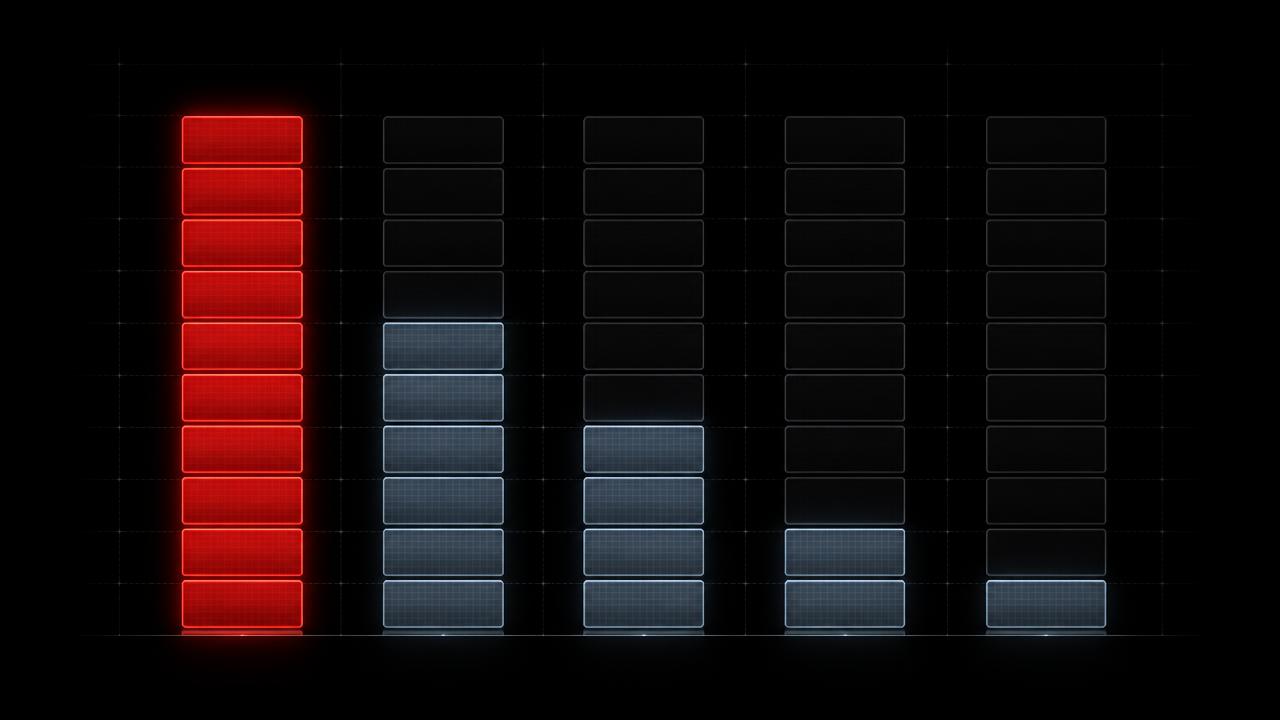
- All four feed CTEM. None of them replaces it, because none of them owns the mobilization stage.
Which should you invest in first?
The right first investment depends on which question your programme currently cannot answer.
| If you cannot answer... | Invest first in | Because |
|---|---|---|
| What do we even own on the internet? | ASM | You cannot scope or prioritise an unknown estate |
| Which of our thousands of findings matter? | EAP or prioritisation logic | Correlation and context turn volume into a queue |
| Are our patches actually being applied? | VM process hygiene | A broken remediation pipeline undermines everything upstream |
| Would an attacker actually succeed? | Validation capability | Proof is what changes remediation behaviour |
| Who owns this and when will it be fixed? | CTEM operating model | The gap is organisational, not technical |
How to read vendor positioning without being misled
Category labels are marketing artefacts and they drift. Rather than debating whether a product is a real CTEM platform, evaluate the capability against the stage you need. Neutral questions work better than category questions.
- Which lifecycle stages does this product execute without another system, and which does it only inform?
- Does it produce evidence that an exposure was exploitable, or only a score suggesting it might be?
- How does it establish asset ownership, and what happens when ownership data is missing?
- Can it write into our existing ticketing system and read the closure state back?
- What does it do when a control blocks an exposure, and does the queue reorder as a result?
How the pieces combine into one programme
A coherent design uses each category for the job it does well. Attack surface management and vulnerability management feed discovery. An exposure assessment platform correlates and scores. Validation tooling supplies proof. Ticketing and automation carry mobilization. CTEM is the process that sequences them and holds the outcome accountable.
| CTEM stage | Category doing the work | Evidence produced |
|---|---|---|
| Scoping | CMDB and business service mapping | Scope document with owners |
| Discovery | ASM, VM, CNAPP, identity tooling | Exposure register |
| Prioritization | EAP plus exploit intelligence | Ranked queue with rationale |
| Validation | BAS, automated pentesting, attack path analysis | Exploitability evidence |
| Mobilization | ITSM and automation | Owned tickets and verified closure |
How this fits the CTEM lifecycle
Each adjacent category maps cleanly onto one or two stages of the lifecycle, and none of them spans all five. That is the single most useful fact in this comparison. When a programme stalls, identify which stage lacks a capability owner rather than searching for a broader platform.
How to measure success
The measure of a well chosen stack is not how many categories you own. It is whether each lifecycle stage has data flowing into the next one without manual reconciliation.
| Metric | What it reveals |
|---|---|
| Stage coverage | How many of the five stages have an accountable capability |
| Duplicate finding rate | Whether ASM, VM and EAP data is being reconciled properly |
| Manual handoff count | How many steps require a human to move data between systems |
| Validated share of the top tier | Whether proof is actually being generated |
| Verified closure rate | Whether mobilization completes the loop |
Common mistakes to avoid
The recurring errors are buying a second discovery source before building prioritisation logic, assuming a risk score is the same thing as validated exploitability, and letting category debates delay the operational work of assigning owners.
How to apply this
- Map your current tooling to the five lifecycle stages and highlight any stage with no owner.
- Count how many discovery sources report the same asset and decide which one is authoritative.
- Replace category questions in vendor conversations with stage and evidence questions.
- Add a validation capability before adding a fourth discovery source.
- Measure manual handoffs between systems and automate the most repeated one first.
- Report programme progress by lifecycle stage coverage rather than by tools purchased.
Common mistakes
- Believing attack surface management alone constitutes exposure management.
- Buying overlapping discovery tools while validation remains unstaffed.
- Treating a risk score as evidence of exploitability.
- Assuming vulnerability management covers identity and cloud entitlement exposure.
- Letting the category debate substitute for defining scope and ownership.
- Evaluating platforms on breadth of claims rather than on the stage you actually need.
Frequently asked questions
Related pages
CTEM vs Vulnerability Management
CTEM vs Vulnerability Management: What's Actually Different
Side-by-side comparison of CTEM and traditional vulnerability management: scope, prioritization, validation, ownership, and continuous risk reduction.
CTEM vs Attack Surface Management
CTEM vs Attack Surface Management: How They Work Together
How CTEM and attack surface management differ, where they overlap, and how ASM feeds the CTEM lifecycle for continuous risk reduction.
CTEM Framework
CTEM Framework: The Complete Operating Model Explained
The full CTEM framework: five stages, inputs, outputs, roles, cadence, and how scope, discovery, prioritization, validation, and mobilization connect.
Complete CTEM Guide 2026
Complete CTEM Guide 2026: Framework and Lifecycle
A complete CTEM guide for 2026: the framework, five lifecycle stages, worked examples, tool categories, metrics and a practical rollout sequence.
CTEM Tool Stack Blueprint
CTEM Tool Stack Blueprint for 2026
A vendor-neutral CTEM tool stack blueprint explaining EASM, CAASM, CNAPP, BAS, PTaaS, ITSM, validation, and remediation roles.
CTEM Practitioner Certification
CTEM Practitioner Certification: For Analysts and Consultants
The free CTEM Practitioner certification with a scenario exam, exposure register lab, prioritization worksheet, and validation exercise.
Earn your free CTEM certification.
Ready to prove your CTEM knowledge? Start with the free LearnCTEM Beginner Certification, continue with the Practitioner Certification, and build toward Program Leader. Every LearnCTEM certificate is free, vendor-neutral, and publicly verifiable at LearnCTEM.com.
Beginner / Practitioner / Program Leader
Explore certificationsAuthor
LearnCTEM Editorial Team
Practitioners and educators writing plain-English guides on Continuous Threat Exposure Management.
Reviewed by
Senior CTEM Practitioner Panel
Reviewed for accuracy against public CTEM guidance and real-world program experience.